Start here
What to know
The key is how fast the swelling is changing and whether it affects the airway. Note when it started, whether it is spreading, and any fever, eye involvement or difficulty opening the mouth. Do not wait for a routine reply if the danger signs are present.
Key facts
- A dental abscess does not clear up on its own; spreading facial swelling or trouble breathing or swallowing is an emergency — call 999. ↗
For this situation
What matters in this situation
Main concern to resolve
Choose the right care setting and next step.
Information that changes the plan
Record the warning sign, start time, change over time, relevant conditions, medicines, allergies and safe transport options around facial swelling and how fast it is spreading.
Question to ask
Which warning sign changes the destination, and how does facial swelling and how fast it is spreading affect the timing?
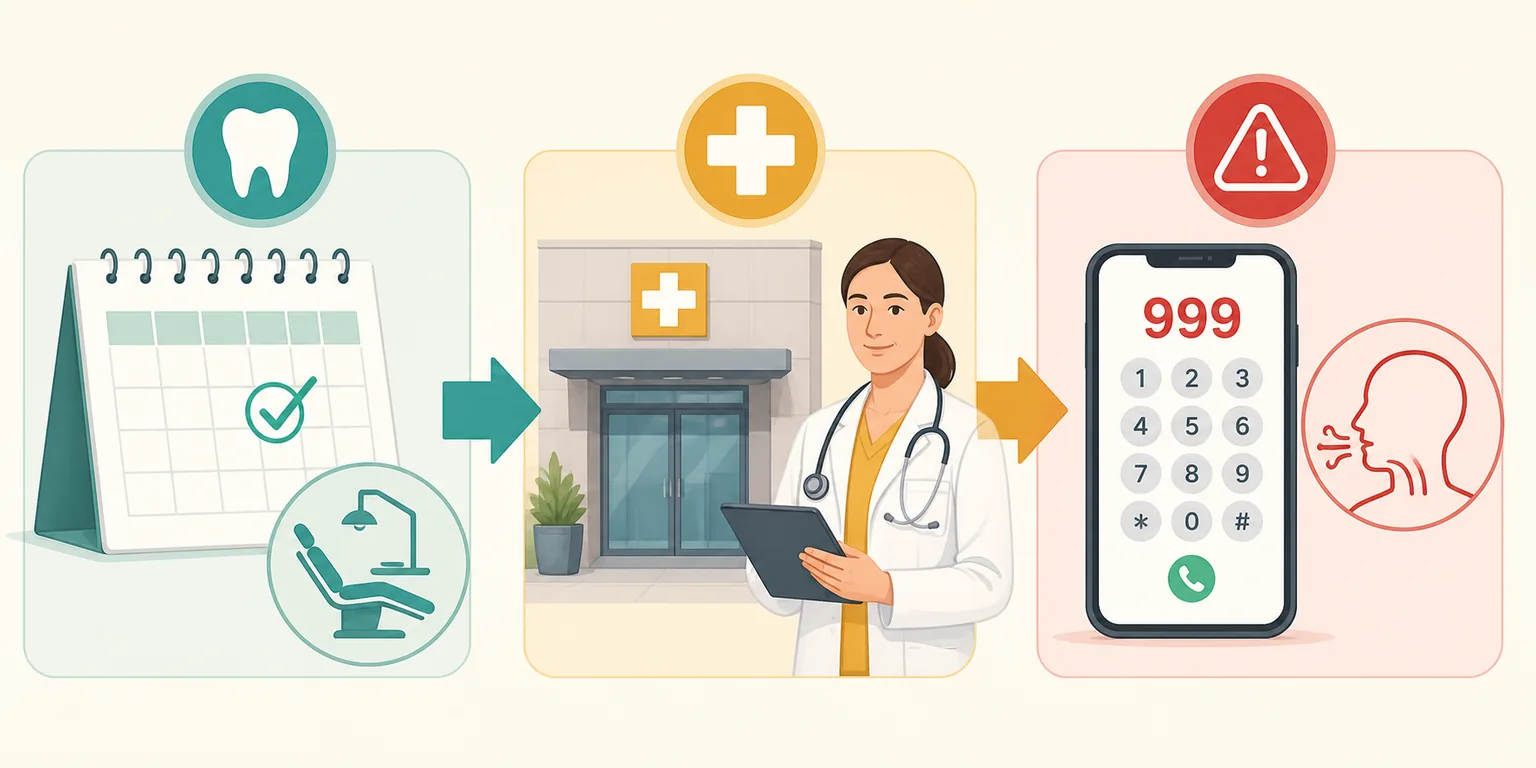
Decision checklist
Questions to answer now
- Which warning sign is present, and when did it start?
- Is the safest place 999, an emergency department, urgent medical care or a prompt dental visit?
- What matters most about facial swelling and how fast it is spreading?
Choose the right care setting
Where dental care is best delivered for Facial Swelling
The right setting depends on the work required, available equipment, medical risk, positioning and follow-up.
At home
Most useful when travel is the main barrier and the immediate goal is assessment, prevention, comfort or planning.
Dental clinic
More suitable when care needs imaging, fixed equipment, precise chair positioning or a longer procedure.
Specialist or hospital
Needed for complex medical risk, sedation, surgery, major trauma or a life-threatening emergency.
Before contacting
What to prepare
- Note the warning sign for facial swelling be emergency and its time course.
- Prepare medicines, allergies and relevant history for handover.
- Arrange safe transport or call emergency services.
- Take the information needed for the immediate destination.
Home-visit enquiry
Tell us what is happening and where the patient is
Start with the area and main concern. Add the other details only when they are useful.
Add visit and access details (optional)
Keep IC numbers, full medical records, medication lists, payment details and dental photographs out of the first message.
Add the area and main concern to prepare the message.
Before booking: Confirm who will attend, their current registration details, the expected visit scope, fees, follow-up and any clinic or hospital referral plan.
When another setting is safer
When home care may not be the right setting
- Use the safest immediate destination and give staff a concise history, medicine and allergy handover.
- Before booking care for facial swelling be emergency, confirm the attending dentist, the scope proposed, fee items, follow-up and the referral plan.
FAQ
Common questions
When is facial swelling an emergency?
When it spreads fast, reaches the eye or neck, comes with fever, or makes breathing or swallowing difficult. Go to an emergency department or call 999.
What if the swelling is mild and slow?
A small, slow gum or cheek swelling without fever or airway signs is still urgent, but it can usually begin with a dental assessment to find and treat the cause.
What should I record before getting help?
When it started, how fast it is changing, any fever, whether an eye is affected, and how wide the mouth still opens.
Sources
Each source is shown with the part of this guide it supports.
- Oral health fact sheet · World Health OrganizationSupports general oral-health background.
- Dental abscess · NHSSupports infection warning signs, urgency and care setting.
- Oral Health Programme · Ministry of Health MalaysiaSupports Malaysian oral-health governance context.
- Malaysian Dental Council · Malaysian Dental CouncilSupports dentist registration and current practising checks.
Content updated: 2026-09-01.